
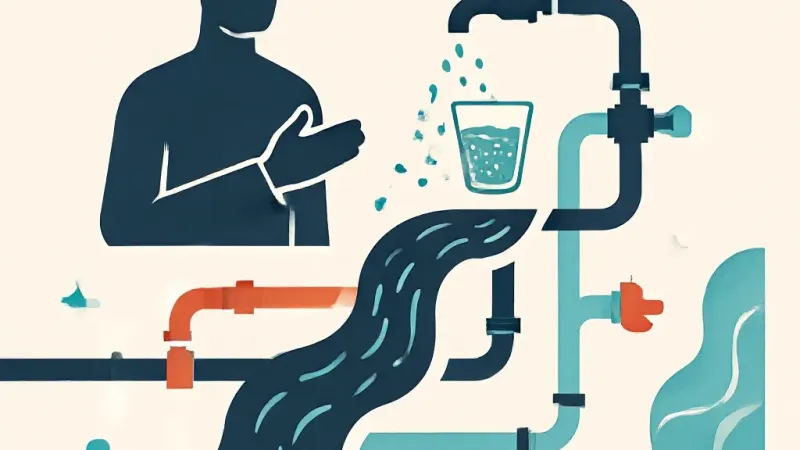
SCOTTSDALE – Governor Katie Hobbs recently defended plans for converting treated wastewater into drinking water, a process some refer to as “toilet to tap,” while also facing scrutiny regarding a claimed investment in a state water initiative.
Speaking at an ASU water event, Governor Hobbs criticized those she believes are attempting to undermine these wastewater recycling efforts, characterizing skepticism as “irresponsible misinformation.” The governor's remarks highlight an ongoing public debate, particularly as the pursuit of purified water from treated sewage has emerged as an election issue in at least one Arizona city. There, a candidate is actively campaigning against such a program, notably releasing a campaign video that used visual imagery of brown-looking liquid to convey their message.
Regulators involved in the process previously rebranded the term from “direct potable reuse,” acknowledging that the original name did not resonate well with public polling. Despite technical assurances that wastewater can be treated to high standards, public perception remains a significant hurdle. Scottsdale, for example, has already curtailed further funding for a similar program after a campaign video brought the optics of the process into sharp focus.
During her appearance, Governor Hobbs stated that she “invested $40 million” in the Arizona Water Innovation Initiative. However, records indicate that former Governor Doug Ducey was responsible for allocating this COVID relief funding in November 2022, a fact also noted in ASU's own public release. When questioned about the discrepancy, Governor Hobbs responded, “I don’t know.” Her staff subsequently provided three explanations that, according to the source material, still pointed to former Governor Ducey as the original source of the funds.
Most wastewater treatment facilities already process water to a level exceeding many existing water sources. Experts note that advancing this treatment to meet drinking water standards is a minimal additional step. However, public objection to the concept of drinking treated sewage persists, irrespective of the technical details of the purification process. The source material notes that neither dismissing concerns as misinformation nor treating them as a failure to grasp basic engineering has altered public pushback, as demonstrated by voters in Scottsdale.
The discussions surrounding water innovation, funding, and public acceptance are critical for Arizona and the wider lower Colorado River region, where water resources are a constant concern. The interplay of political claims, scientific realities, and public opinion continues to shape the future of water management strategies.